πŸ„ Hydro-Sensei Ranch Water Class

Solar Livestock Water

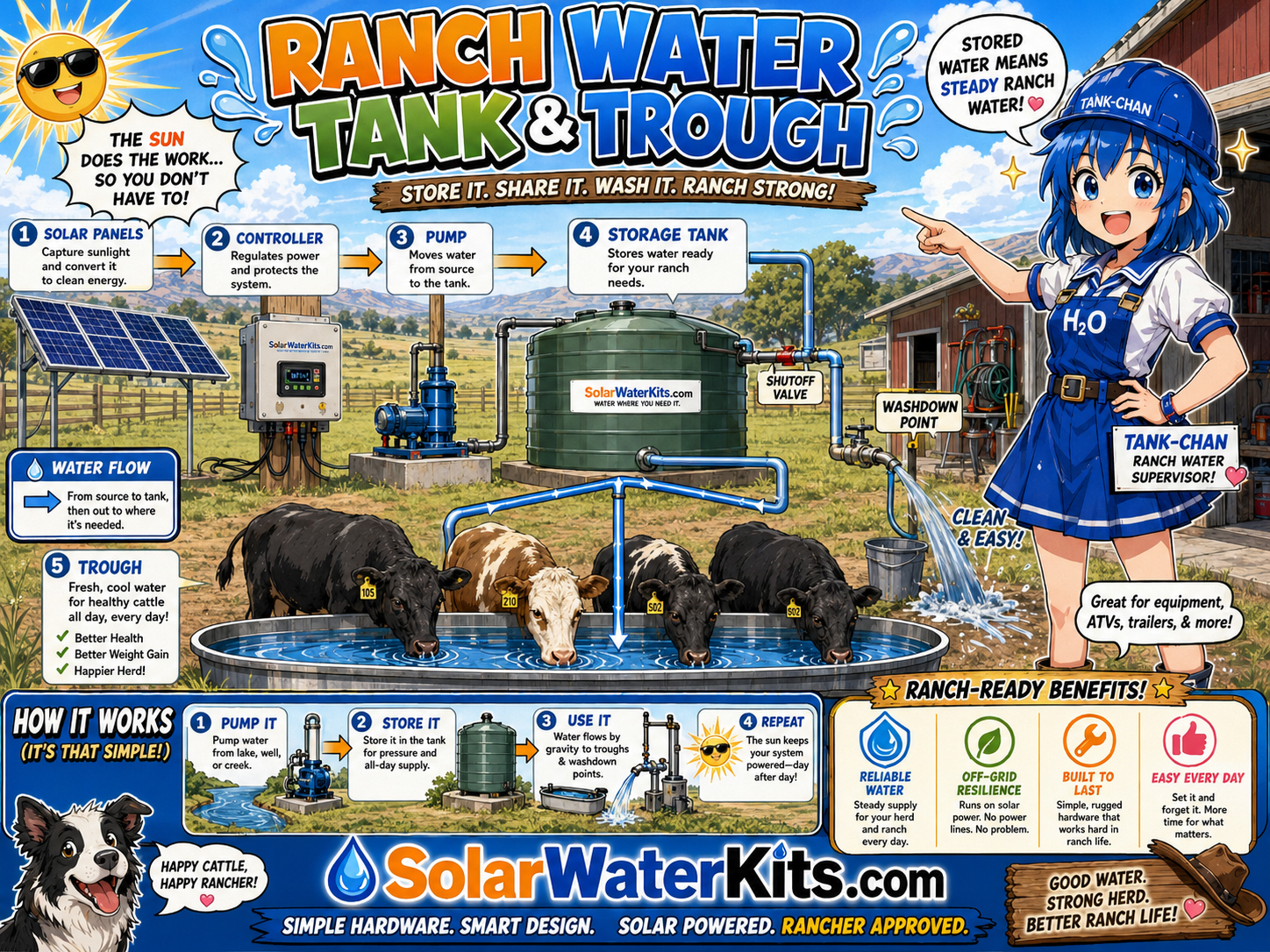
Animals need water every day, not just when the pump feels heroic. Solar livestock water systems combine source water, solar pumping, storage tanks, troughs, float valves, inspection, filtration, freeze planning, and backup water.
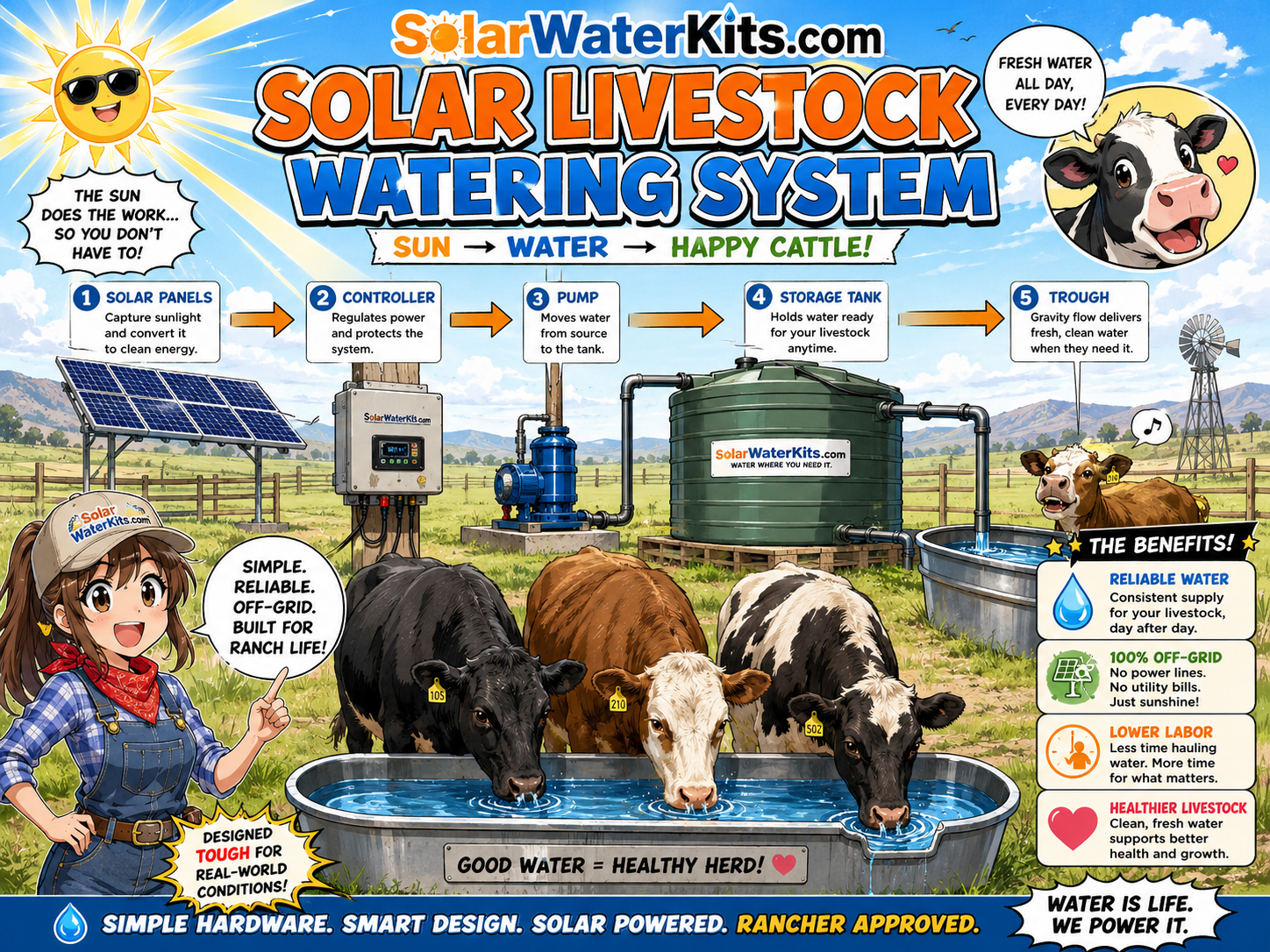
πŸ„ Daily Gallons β˜€οΈ Solar Pump πŸ›’οΈ Storage Tank 🚰 Float Valve πŸ‘€ Inspect Daily
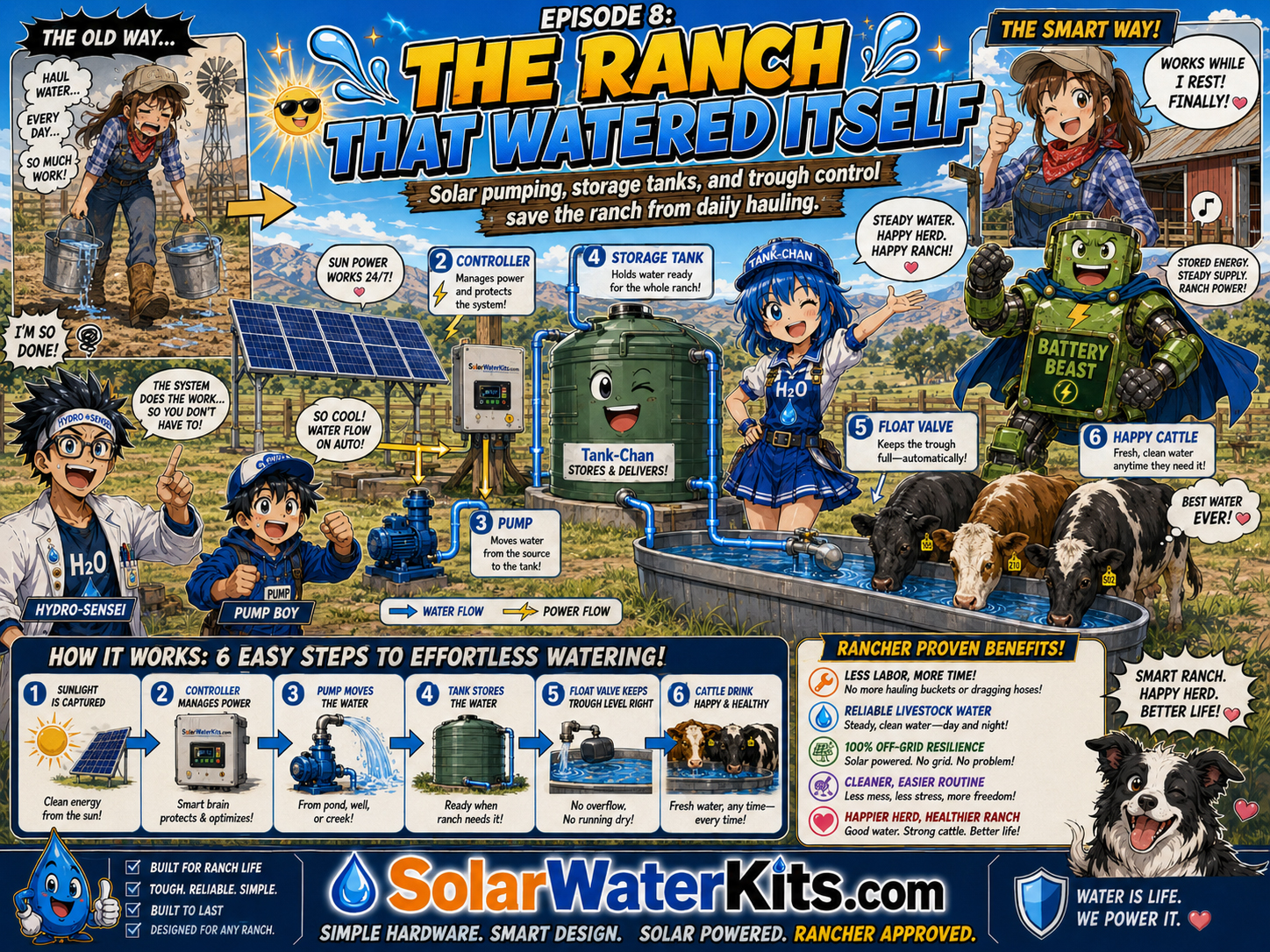
Cattle drinking from a trough fed by solar pumping, storage tanks, float valves, and a protected ranch water system.
The herd needs reliability before cleverness.
Livestock Basics

A livestock water system is a reliability system

A solar pump can reduce hauling and support remote troughs, but animals still depend on real inspection, adequate storage, clean troughs, protected equipment, and a backup plan.

The livestock water chain

Ranch water = source + pump + storage + trough + float valve + inspection + backup.
  • Source: well, tank, pond, spring, hauled water, or approved supply.
  • Pump: solar direct, battery-backed, transfer, well, or booster pump.
  • Storage: reserve gallons for heat, clouds, pump service, and high demand.
  • Trough: durable drinking point with stable placement and drainage.
  • Float valve: controls refill, but still needs inspection and protection.
  • Inspection: confirms water is actually present, clean enough, and accessible.
  • Backup: alternate fill method, spare parts, or emergency plan.
Daily Demand

Start with gallons per day, then design the pump

Animal water needs vary by species, size, feed, weather, shade, health, activity, lactation, and local conditions. Use agricultural or veterinary guidance for real demand planning.

Herd size matters

A system for a few animals is different from a system for a full herd. Daily gallons should be estimated before pump and tank decisions.

Heat changes everything

Hot weather can raise demand and stress equipment. Storage reserve should consider peak conditions, not only average days.

Distance and elevation matter

Remote troughs may require longer pipe runs, larger pipe, more head, different controls, and better protection from animals or weather.

Hydro-Sensei says

β€œDesign for the thirsty day, not the easy day.”

Troughs and Float Valves

The trough is where design meets the animal

Float valves, trough pads, drainage, cleaning, animal access, freeze protection, and inspection decide whether water actually reaches the herd.
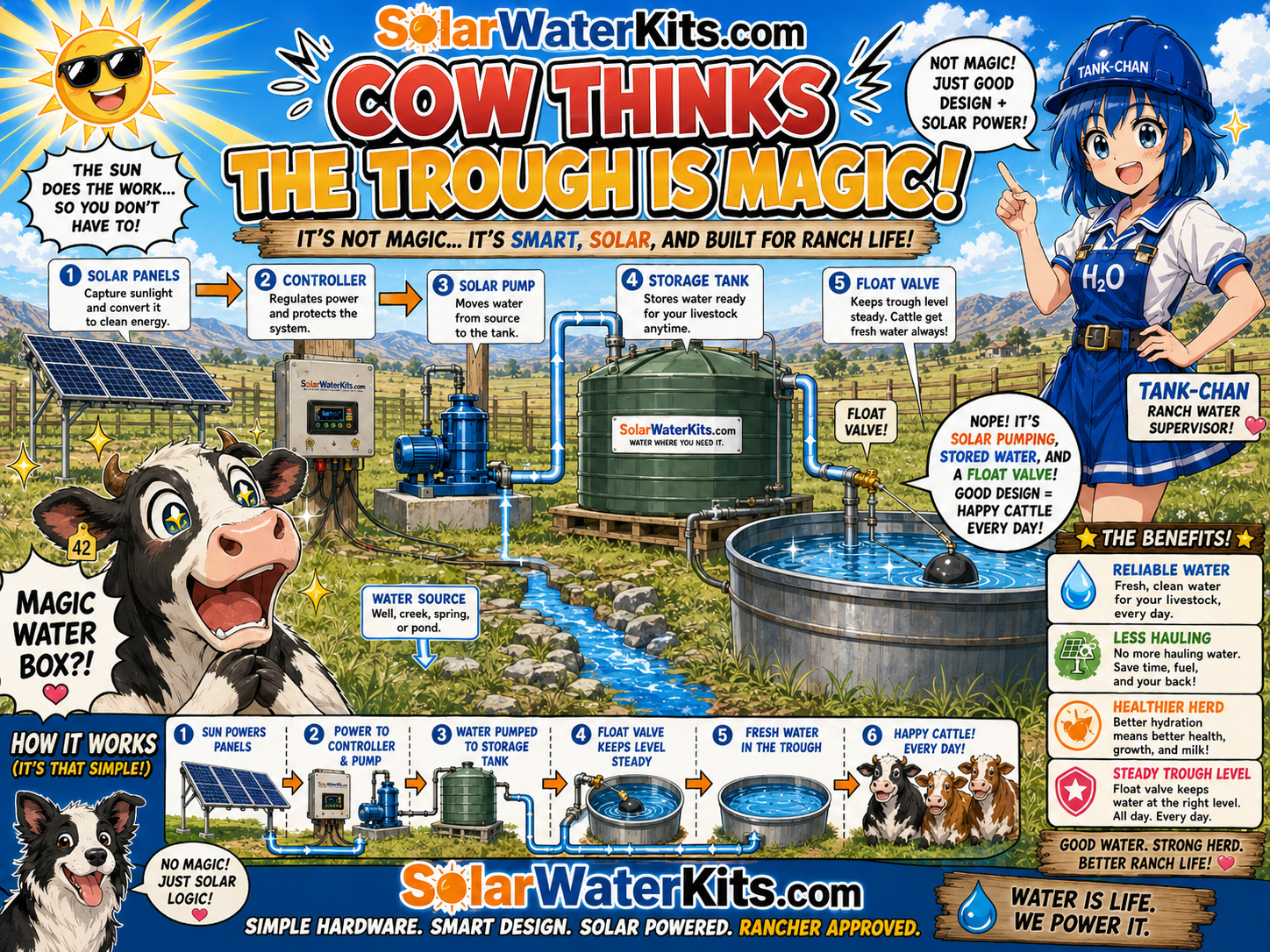
Trough checklist

  • Trough is sized for the animals and refill rate.
  • Float valve is protected from damage and sticking.
  • Overflow and drainage avoid mud pits.
  • Animals can access water safely.
  • Trough is cleaned often enough for animal health.
  • Algae, manure, insects, debris, and contamination are monitored.
  • Freeze protection is planned where needed.
  • Backup fill method is available.
Trough Issue Possible Cause Ranch Response
Trough empty Pump failed, tank empty, float stuck, valve closed, line frozen, source low. Inspect source, pump, tank, valve, float, and pipe immediately.
Trough overflowing Float valve stuck open, debris in valve, bad adjustment, damaged hardware. Shut off, repair float, clear debris, check drainage.
Low refill rate Clogged filter, undersized pipe, weak pump, low battery, friction loss. Check pump output, filter, pipe, pressure, and battery state.
Muddy area Overflow, leaks, poor pad, animal traffic, bad drainage. Fix overflow, improve drainage, inspect trough base.
Dirty water Algae, manure, debris, insects, stagnant water, source issue. Clean trough, inspect source and tank, follow animal-water guidance.
Frozen line Exposed pipe, valve, float, or trough not protected. Use proper freeze design and seasonal checks.
Solar Pumping

Solar livestock water works best with storage

Pumping directly to a trough may work in some cases, but storage usually makes the system more forgiving. Pump when sun is available, store water, and let trough controls handle refill.
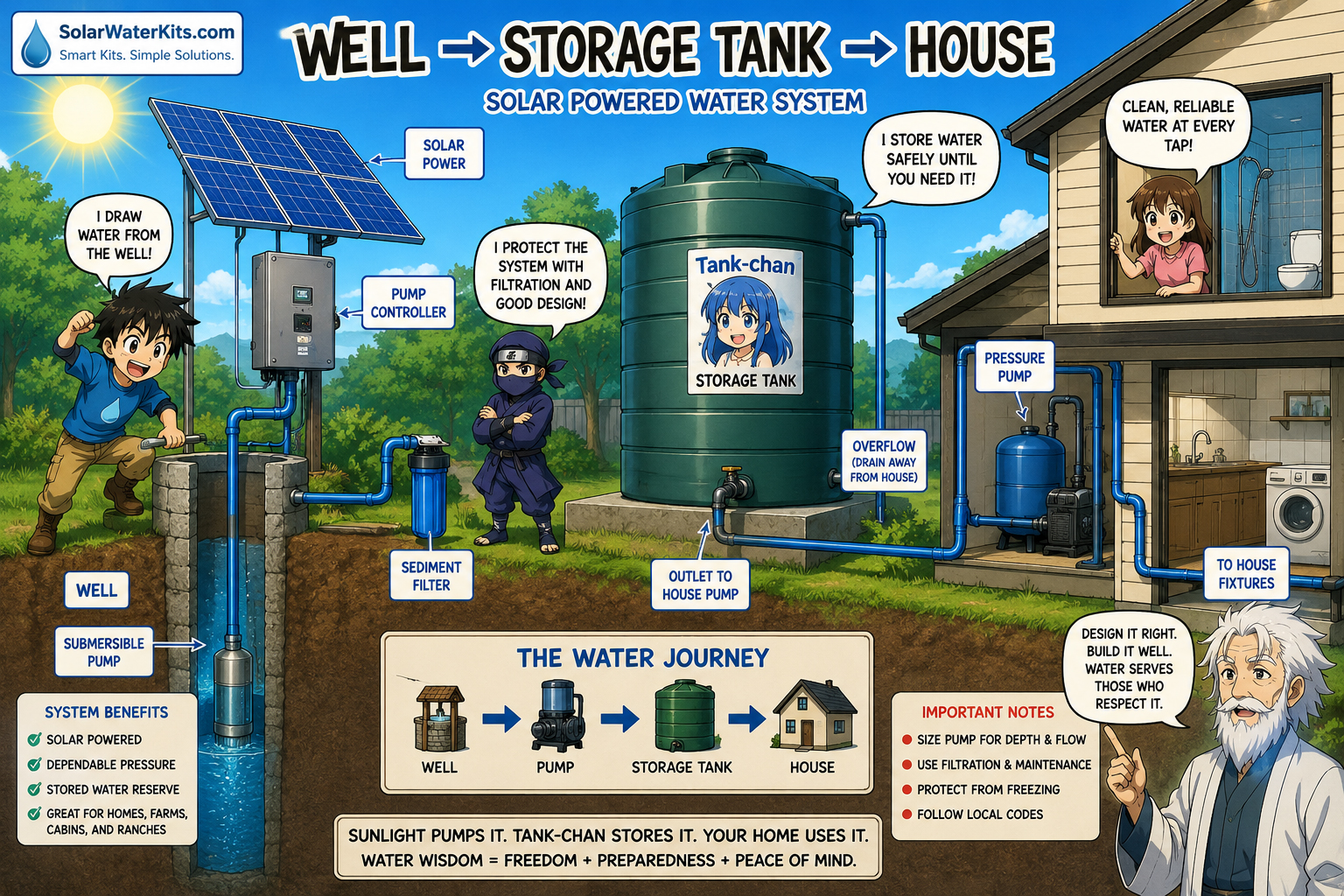
Educational sequence showing pumping to storage first, then serving water needs.
Storage

Pump to storage first

Storage creates reserve gallons before animal demand peaks.

Stored Water
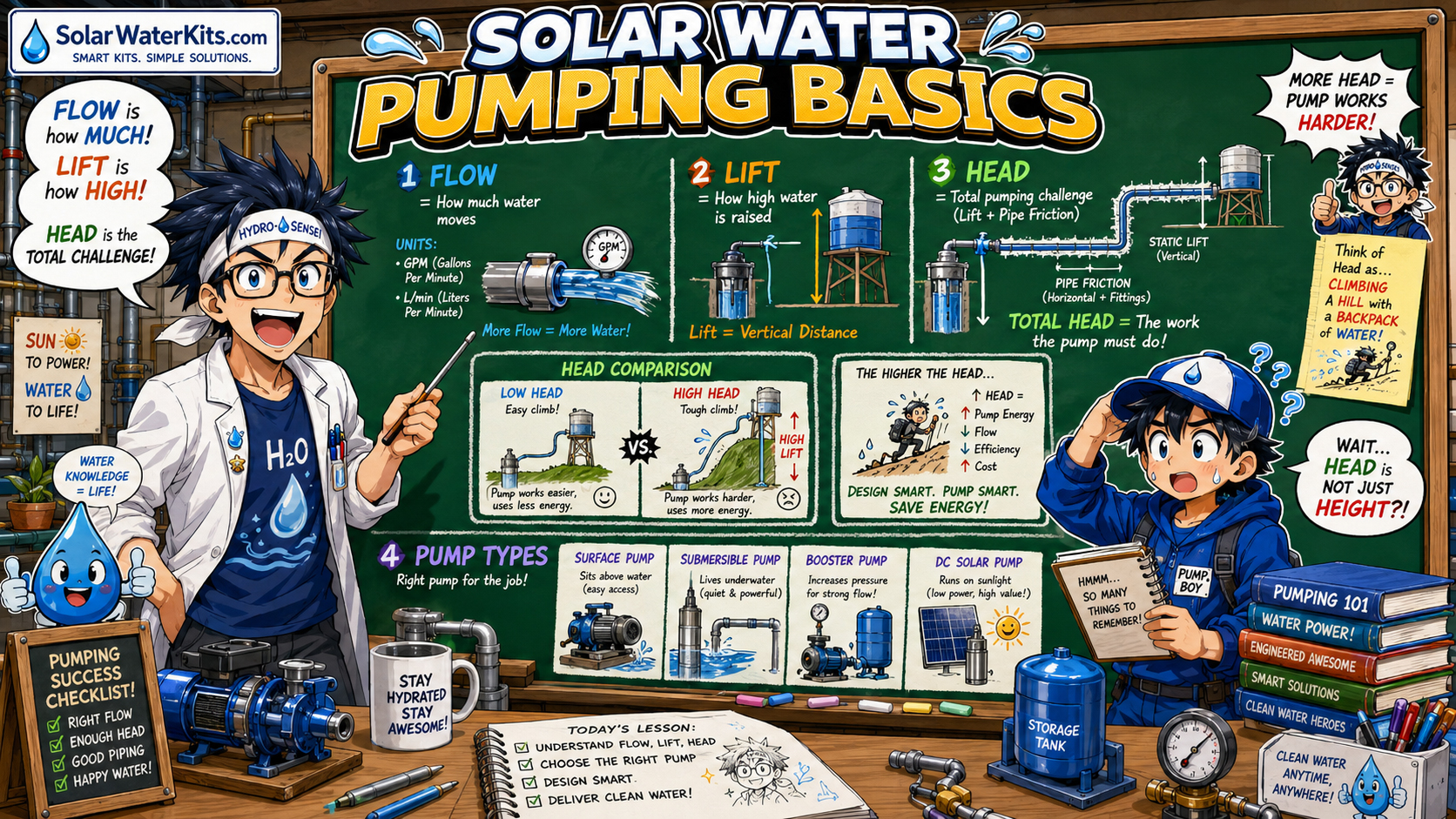
Hydro-Sensei explains solar water pumping basics.
Pump Sizing

Size for real demand

Flow, lift, head, pipe friction, and daily gallons decide the pump.

Pump Sizing
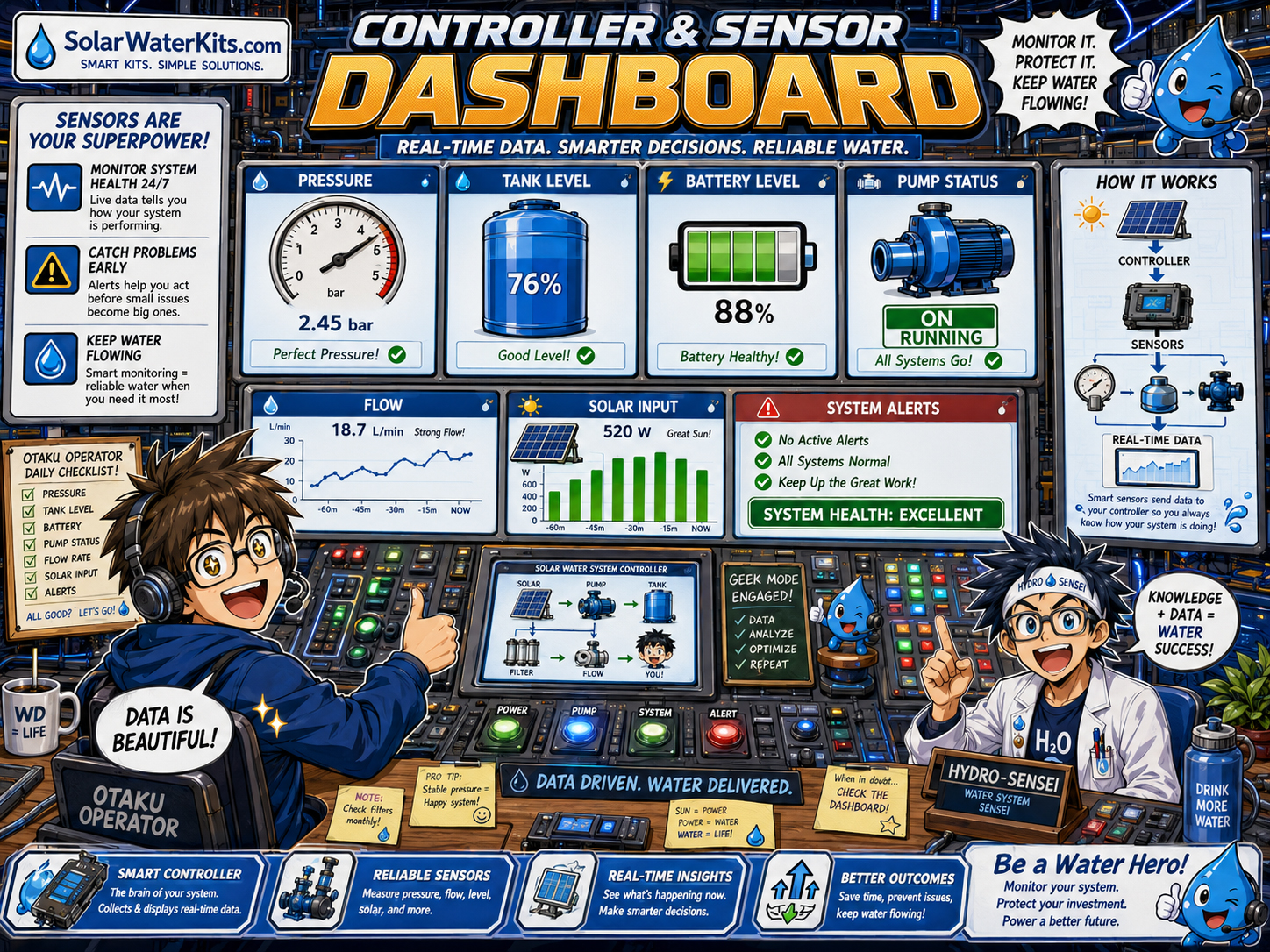
Otaku Operator monitoring tank level, battery state, pump status, pressure, and sunlight.
Controls

Status prevents surprises

Tank level, pump status, battery state, float valve, and alarms help protect animals.

Controls

Battery Beast says

β€œIf the animals depend on the system, the system needs a backup plan.”

Field Durability

Livestock water systems live outdoors with animals

Animals rub, chew, bump, lean, kick, and investigate. Weather adds heat, dust, freezing, mud, insects, storms, and UV exposure. Field systems need protection.

Protect equipment

  • Protect pumps, controllers, batteries, and wiring from animals.
  • Use appropriate enclosures and mounting.
  • Keep electrical equipment away from wet animal areas.
  • Protect pipe and valves from impact.

Plan for weather

  • Consider heat, freeze, storms, dust, insects, and rodents.
  • Protect exposed pipe and valves.
  • Check solar panels for dirt, shading, and damage.
  • Inspect after severe weather.

Keep spare parts

  • Float valve parts.
  • Pipe fittings and clamps.
  • Filter screens and cartridges.
  • Fuses, breakers, or controller parts as appropriate.
  • Hose and emergency fill fittings.
Inspection Routine

Automatic water still needs human eyes

A float valve cannot call you if it breaks unless the system has monitoring. Even monitored systems need real inspection.

Daily or regular field check

  • Confirm water is present and accessible.
  • Look for animal behavior showing water stress.
  • Inspect trough cleanliness.
  • Look for leaks, overflow, mud, or erosion.
  • Check float valve operation.
  • Confirm tank level and refill rate.
  • Check pump or controller alarms.
  • Record problems and repairs.

Seasonal check

  • Review peak heat demand.
  • Review freeze protection before winter.
  • Clean tanks and troughs as appropriate.
  • Inspect panels, wiring, batteries, and enclosures.
  • Test backup fill method.
  • Review labels and diagrams.
  • Update spare parts inventory.
  • Check water quality guidance and test records.

Otaku Operator says

β€œThe clipboard is not paperwork. It is animal protection in written form.”
Livestock Water Safety Notice

Animal water systems affect animal health and require responsible design

Real livestock water systems may involve wells, solar pumps, tanks, troughs, float valves, animal behavior, water quality, freezing, electrical equipment, batteries, pressure systems, agricultural guidance, veterinary guidance, permits, inspections, and environmental concerns.

Do this

  • Use qualified pump, plumbing, electrical, well, agricultural, and water professionals where required.
  • Follow agricultural and veterinary guidance for animal water demand and quality.
  • Inspect troughs and water levels routinely.
  • Protect equipment from livestock, weather, freezing, insects, rodents, and impact.
  • Provide backup water plans for pump, solar, source, or freeze failure.
  • Follow local codes, permits, and manufacturer instructions.

Do not do this

  • Do not leave animals dependent on one unmonitored failure point.
  • Do not assume animals can drink any available water safely.
  • Do not ignore algae, mud, manure, contamination, salinity, or chemical risks.
  • Do not place electrical equipment where livestock can damage it.
  • Do not improvise pump wiring or pressure plumbing in the field.
  • Do not treat this page as a permit drawing, veterinary guidance, or installation manual.